
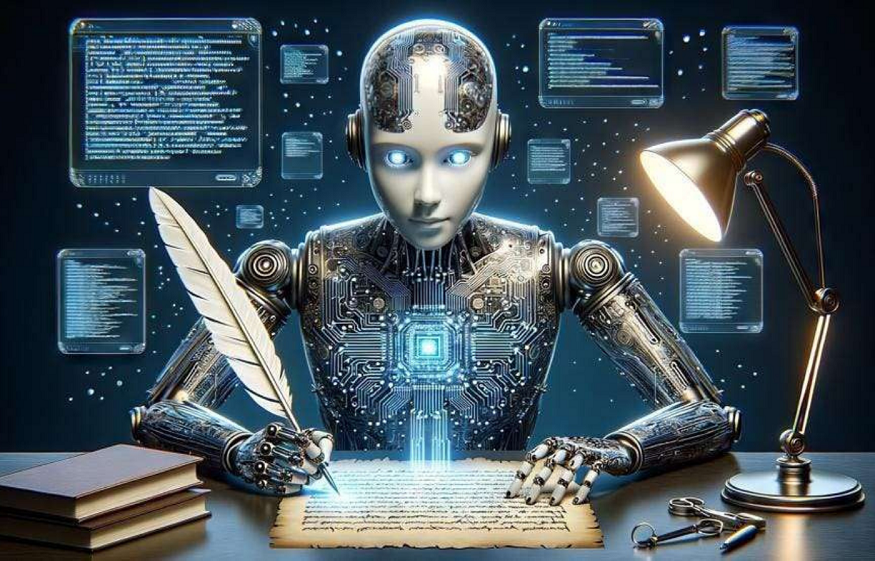
In today’s fast-paced technological landscape, Generative AI is no longer just a buzzword—it’s a transformative force that is redefining the way we create, innovate, and interact with machines. From crafting art and writing compelling content to designing complex engineering solutions, generative AI systems are pushing the boundaries of what machines can achieve. Businesses, educators, and creative professionals alike are beginning to harness the power of these tools to save time, enhance productivity, and explore new frontiers of creativity.
What is Generative AI?
At its core, generative AI refers to algorithms that can generate new content, data, or solutions based on patterns learned from existing datasets. Unlike traditional AI systems that focus on analyzing or classifying information, generative AI creates. These systems are powered by advanced machine learning models such as Generative Adversarial Networks (GANs), Variational Autoencoders (VAEs), and large language models, which allow them to produce outputs that are often indistinguishable from human-created content.
Read More : Backup & Disaster Recovery: The Foundation of Modern Business Continuity
The possibilities are practically limitless. For instance, generative AI can produce photorealistic images, compose music, draft legal documents, or even write computer code. The key lies in its ability to learn complex patterns and extrapolate them into original creations.
Applications Transforming Industries
Creative Arts and Media
Artists and designers are embracing generative AI to spark innovation. Tools powered by generative AI can create entire paintings, design fashion lines, or generate music tracks. For filmmakers and game developers, AI-generated content can speed up the creative process by providing concept art, storyboarding, or realistic simulations. AI services are increasingly being offered to creative professionals to integrate these tools seamlessly into their workflows.
Business and Marketing
In the corporate world, generative AI is revolutionizing content creation and customer engagement. Marketing teams use AI to draft blog posts, social media content, and personalized email campaigns. Generative AI can also produce realistic product visuals and advertisements, helping brands connect with their audience in novel ways. Many IT services now include AI-driven analytics and automation solutions that enhance business intelligence and operational efficiency.
Healthcare and Life Sciences
Generative AI is making strides in drug discovery and medical research. By analyzing molecular data, AI can generate new chemical compounds or predict protein structures, accelerating the development of life-saving treatments. In imaging, generative AI enhances the quality of MRI or CT scans, aiding in faster and more accurate diagnoses.
Engineering and Design
Generative AI is transforming product design and engineering. From architecture to automotive design, AI algorithms can propose optimized structural designs, simulate performance, and suggest innovative solutions that humans might not have considered. This not only reduces trial-and-error but also improves efficiency and sustainability.
Benefits of Generative AI
- Efficiency: Automates repetitive tasks and speeds up the creative process.
- Innovation: Unlocks new ideas that humans might not conceive.
- Personalization: Produces tailored content or solutions for specific audiences.
- Cost Savings: Reduces the need for extensive human labor in content creation and design.
- Scalability: Handles large-scale projects with minimal incremental effort.
Challenges and Ethical Considerations
Despite its immense potential, generative AI comes with challenges. Content authenticity is a major concern; AI-generated material can be mistaken for human work, leading to misinformation or plagiarism issues. Privacy is another concern, especially when AI models are trained on sensitive or proprietary data.
There are also ethical questions about creativity and ownership. Who truly owns an AI-generated artwork or piece of writing? Organizations are beginning to develop frameworks to address these questions, ensuring that generative AI is used responsibly and transparently.
Future Outlook
Generative AI is poised to become even more integral to our lives. As models become more sophisticated, the distinction between human-generated and AI-generated content will continue to blur. Industries will continue to adopt AI as a partner in creativity rather than a replacement, enhancing human potential instead of diminishing it.
Educational institutions are also exploring AI-powered learning tools that adapt to individual student needs, offering personalized explanations and resources. Similarly, in business, predictive generative AI can help forecast market trends, design product concepts, and even optimize supply chains.
Getting Started with Generative AI
For businesses or individuals looking to explore generative AI, the first step is understanding your goals. Are you seeking to enhance creativity, streamline operations, or develop innovative products? From there, selecting the right tools and platforms—ranging from AI-powered design software to advanced language models—is crucial.
Read More : IT Services for Fairfield, New Jersey: What Businesses Need in 2025
Equally important is fostering an environment of experimentation. Generative AI thrives when users are willing to iterate, explore variations, and refine outputs. Combining human intuition with AI capabilities often yields the most compelling and practical results.
Conclusion
Generative AI is more than a technological trend—it’s a creative revolution. By bridging human imagination with machine intelligence, it opens doors to unprecedented innovation across industries. While challenges remain, the opportunities far outweigh the risks for those willing to embrace this cutting-edge technology. Whether you are an artist, entrepreneur, or engineer, generative AI offers the tools to dream bigger, create faster, and shape the future in ways previously unimaginable.
As we continue to integrate AI into our daily workflows through AI services and IT services, one thing is clear: the future belongs to those who can harness the combined power of human creativity and generative AI.