

Key Points:
- Careful site planning helps prevent crowded pathways and difficult future upgrades.
- Cable choices should match speed, distance, power needs, and network growth.
- Professional testing can uncover faults that basic connectivity checks may miss.
- Clear labeling makes repairs, office moves, and network changes much easier.
- Organized racks and patch panels reduce troubleshooting time during future service.
- Strong trade coordination helps commercial cabling projects stay on schedule.
- Scalable infrastructure gives businesses more room for future devices and expansion.
- Accurate records help technicians understand the network without repeated work.
- Reliable cabling focuses on long-term performance, not just immediate connectivity.
Commercial networks now support far more than desktop computers and desk phones. Offices, warehouses, healthcare facilities, hotels, and other business properties depend on cabling for Wi-Fi, cameras, access control, cloud systems, phones, and connected devices. When the cabling behind those systems is poorly planned, businesses may face slow performance, confusing equipment rooms, and costly changes later. A reliable provider looks beyond the immediate cable run and considers how the whole network needs to work.
That wider view matters because business technology rarely stays the same for long. A company may add employees, move departments, install more access points, or expand security systems within a year or two. Good cabling work should make those changes easier rather than forcing another major rebuild. The difference between basic wiring and professional network infrastructure often comes down to planning, testing, organization, documentation, and the ability to support future growth without disrupting daily operations.
Good Cabling Starts with Careful Site Planning
A dependable cabling company begins by understanding the property before installation starts. Their team reviews floor plans, telecom rooms, device locations, ceiling space, cable routes, and expected network use. This helps them see where pathways may become crowded and where future connections may be needed. It also gives them time to coordinate with electrical, security, HVAC, and other trades that may be working in the same areas during construction or an active office upgrade.
Basic wiring work may focus only on getting a cable from one point to another. That can solve an immediate need, but it may create problems later if the route is difficult to access or has no room for growth. For example, a 60-person office adding another department next year may need more ports and wireless access points. Planning spare pathway space now can make that later expansion much easier and less disruptive.
Testing Shows Whether the Work Is Ready
Professional cabling should be tested before the project is treated as complete. Testing can reveal damaged cable, wiring errors, weak terminations, or links that do not meet expected performance. Some faults do not cause a total outage. Instead, users may notice slow transfers, unstable devices, or random connection problems several weeks later. Testing gives the business a clearer picture of the installed network and helps correct issues before they become harder to trace.
Good test records are useful long after installation. If a connection begins failing six months later, the IT team can compare current results with the original test data. That can help show whether the issue comes from the cable, a device, or a later network change. Without those records, troubleshooting often takes longer because technicians must test more of the network before they can narrow down the cause of the problem.
Organization Makes Future Changes Much Easier
A reliable cabling company treats labeling and documentation as part of the job, not as optional finishing work. Patch panels, wall outlets, racks, and cable runs should be clearly identified so technicians can trace connections without disturbing working systems. This becomes especially useful in large offices or multi-floor properties where hundreds of cables may end in the same room. Clear labels save time during repairs, upgrades, office moves, and equipment replacements.
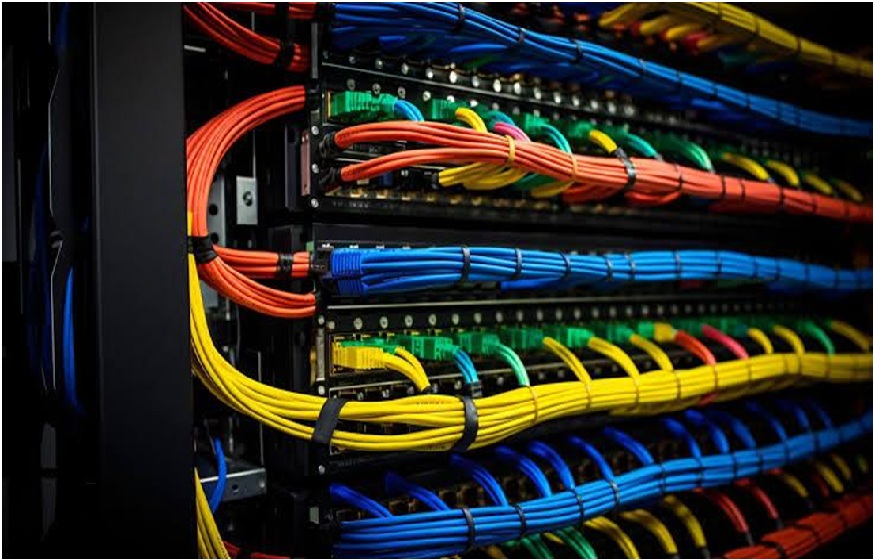
Equipment rooms should be organized with the same care. Neat racks, managed patch cords, readable labels, and clear service space make future work safer and faster. A crowded rack may still function today, but every later change becomes harder. For example, adding a new switch in a room full of tangled patch cords can turn a simple upgrade into several hours of tracing. Good organization takes more effort upfront, but it makes long-term support much easier.
Commercial Cabling Projects Need Strong Trade Coordination
A skilled cabling contractor understands that network work usually happens alongside other trades. Cabling crews may share ceiling space with electricians, fire systems, security installers, and mechanical teams. They may also need access to occupied offices where noise or downtime must stay low. Clear scheduling helps each group know when spaces are available, which pathways are reserved, and which systems must remain active. This reduces conflicts and keeps the project moving more smoothly.
Coordination becomes even more important during office moves or phased upgrades. One department may still be working while another floor is being rewired. In that situation, the cabling team needs a clear sequence so active connections are protected, and new links are tested before employees return. A weekend move involving 80 workstations, for example, leaves little room for guesswork. Good planning can keep the change organized and reduce Monday morning network problems.
Scalability Separates Short-Term Wiring From Infrastructure
A reliable network should support more than today’s device count. Businesses often add wireless access points, cameras, phones, workstations, and connected equipment as they grow. Spare rack space, practical pathway capacity, and well-planned backbone links can make those additions easier. The goal is not to overbuild every part of the network. It is to avoid creating a system that reaches its limit soon after the first installation is fully finished.
Scalability also depends on keeping accurate records. Floor plans, port numbers, rack locations, cable routes, and test results give future technicians a useful starting point. When a business moves a team or expands into another area, they can see what is already available before running new cable. That reduces repeated work and lowers the risk of changing systems that still perform well. Clear records turn the cabling system into manageable infrastructure instead of a collection of unknown connections.
Cable Selection Should Match Real Network Demand
The right cabling contractor does not choose cable only by price or habit. They consider speed, distance, power needs, device type, and future network plans before recommending copper, fiber, or a mix of both. Copper may work well for many office connections, while fiber can be better for longer backbone runs or high-bandwidth links between telecom rooms. Matching the cable to the job helps protect performance without adding equipment the business does not need.
Installation quality matters just as much as the cable itself. Poor bends, damaged jackets, loose connectors, or weak terminations can reduce network performance even when high-quality cable was purchased. A careful team protects cable during pulling, follows proper pathways, and keeps terminations clean and consistent. This is especially important in busy commercial buildings, where one poor connection can affect a phone, camera, access point, or other device that employees depend on throughout the day.
Conclusion
The difference between a reliable commercial cabling provider and a basic wiring provider becomes clear over time. Strong planning, correct cable selection, careful installation, testing, labeling, coordination, and room for growth all help a network remain easier to manage. Businesses that consider these factors from the start can reduce avoidable repairs and make future changes with less disruption. The result is a cleaner network foundation that supports both current work and new technology as needs change.
CMC Communications supports commercial businesses with structured cabling, network cabling, fiber installation, testing, and related infrastructure services. Their team can review building conditions, device needs, cable routes, equipment rooms, and future growth before installation begins. This helps businesses avoid short-term fixes that may create bigger problems later. With organized work, clear testing, and practical planning, they can build a network foundation that is easier to maintain, troubleshoot, and expand as business technology continues to change.
Frequently Asked Questions
Question: What should a business check before choosing a commercial cabling provider?
Answer: Businesses should review planning experience, testing methods, documentation, installation quality, and the provider’s approach to future growth. A good provider should also explain cable choices clearly and show how the proposed layout fits existing equipment, telecom rooms, and building pathways.
Question: Why is cable testing important after installation?
Answer: Testing helps find damaged cables, wiring errors, poor terminations, and links that may not meet expected performance. Some problems do not cause an immediate outage, so test results can catch faults early and provide a useful baseline for future troubleshooting.
Question: How does cable labeling help during future upgrades?
Answer: Clear labels make it easier to trace outlets, patch panels, ports, and cable routes without disconnecting working equipment. This can save time during office moves, repairs, and network expansions while reducing the chance that technicians change the wrong connection.
Question: Should commercial cabling be planned for future growth?
Answer: Yes. Businesses often add staff, access points, cameras, phones, and connected devices over time. Leaving sensible pathway space, rack capacity, and connection points can make those changes easier and reduce the need to reopen finished areas during every upgrade.
Question: What is the main difference between basic wiring and professional network cabling?
Answer: Basic wiring may focus on making a connection work today. Professional cabling also considers performance, testing, organization, documentation, service access, and future changes. That wider approach creates infrastructure that is easier to manage and more useful as the business grows.